

Safety Evaluation System
Single-Dose Toxicity Studies
Repeated-Dose Toxicity Studies
Safety Pharmacology Studies
Immunogenicity Studies
Genotoxicity Studies
Reproductive Toxicity Studies
Carcinogenicity Studies
Dependence Studies
Local Toxicity Studies
Toxicokinetic Studies
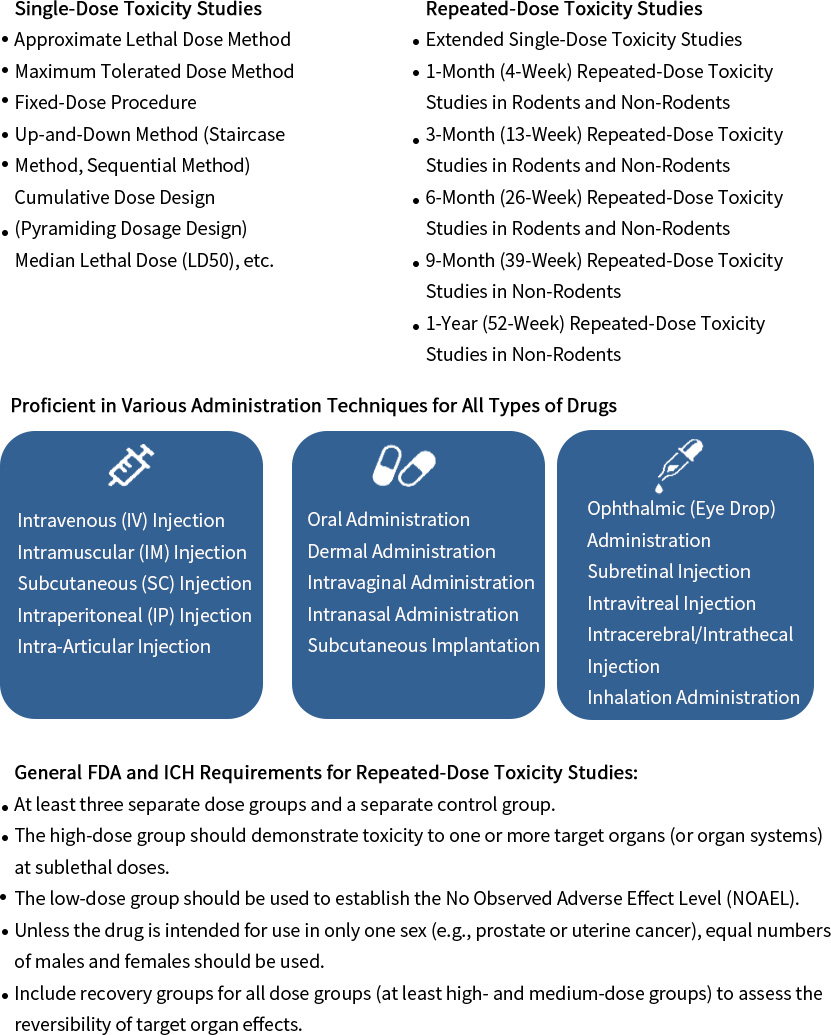
◆ Single-Dose Toxicity Studies
Single-Dose Toxicity Studies: This refers to the toxic reactions observed within a specified period after animals are administered the test article once or multiple times within 24 hours. It is of significant importance for preliminarily elucidating the toxic effects of a drug and understanding its target organs of toxicity.
Necessity: The results of single-dose toxicity studies can serve as a reference for dose selection in subsequent toxicological research, and can also indicate key parameters that require focused observation in later toxicity studies. Furthermore, by observing animal responses to different routes of administration, a preliminary assessment of the test article’s bioavailability can be made, providing reference for formulation development. Currently, the FDA, ICH, and OECD do not mandate single-dose toxicity studies, but the domestic CDE still requires them to be conducted.
◆ Repeated-Dose Toxicity Studies
Predict the potential clinical adverse effects that the test article may cause, including the nature, severity, dose-response and time-response relationships, and reversibility of these adverse effects;
Identify the target organs or tissues of toxicity from repeated administration of the test article;
If possible, determine the No Observed Adverse Effect Level (NOAEL);
Propose the starting dose for the First-in-Human (FIH) clinical trial and provide a safe dose range for subsequent clinical trials;
Provide a reference for monitoring, preventing, and treating clinical adverse reactions.
● General Toxicity-Related Guidelines
Technical Guidelines for Single-Dose Toxicity Studies of Drugs
Technical Guidelines for Repeated-Dose Toxicity Studies of Drugs
ICH M3(R2): Guidance on Nonclinical Safety Studies for the Conduct of Human Clinical Trials and Marketing Authorization for Pharmaceuticals
ICH S4: Duration of Chronic Toxicity Studying in Animals (Rodent and Non-Rodent Toxicity Studies)
ICH S6(R1): Preclinical Safety Evaluation of Biotechnology-Derived Pharmaceuticals
ICH S11: Nonclinical Safety Testing in Support of Development of Paediatric Pharmaceuticals
ICH S9: Nonclinical Evaluation for Anticancer Pharmaceuticals
● Service:
● Examination Criteria:
General condition (body weight, food consumption, activity), mortality, toxicokinetics (TK), organ weights, pathology, clinical biochemistry, hematology, urinalysis, coagulation, toxicokinetic analysis, etc. In addition to the required parameters, additional examinations should be added based on the specific characteristics of the test article. Additional specialized testing should be performed for specific target organ toxicities.
● Animal Species
Rodents (Rats, Mice, Hamsters, Guinea Pigs)

Non-Rodents (Rabbits, Dogs, Non-Human Primates, Minipigs, etc.)

● Routine Administration Routes
Table 1: Routine Administration Routes and Dosage Volumes (and Maximum Dosage Volumes).
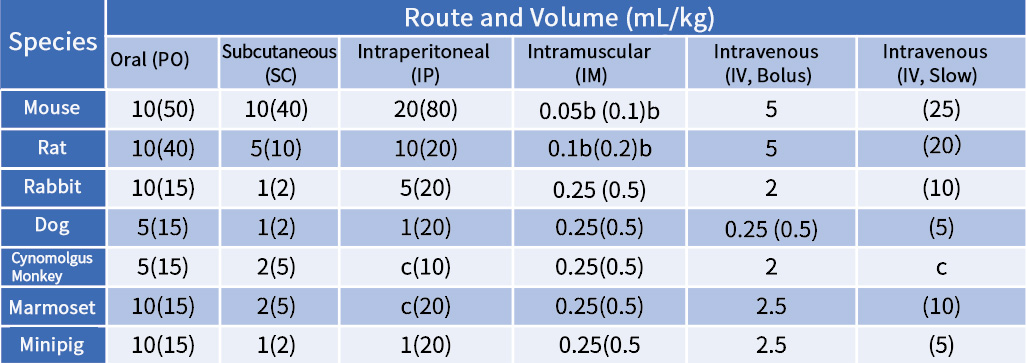
a、For non-aqueous injections, absorption time shall be considered before readministration. No more than two intramuscular sites per day. Subcutaneous sites should be limited to two or three per day. Subcutaneous sites are not applicable for Freund's adjuvant administration.
b、The total injection volume per site is in milliliters.
c、No data available.
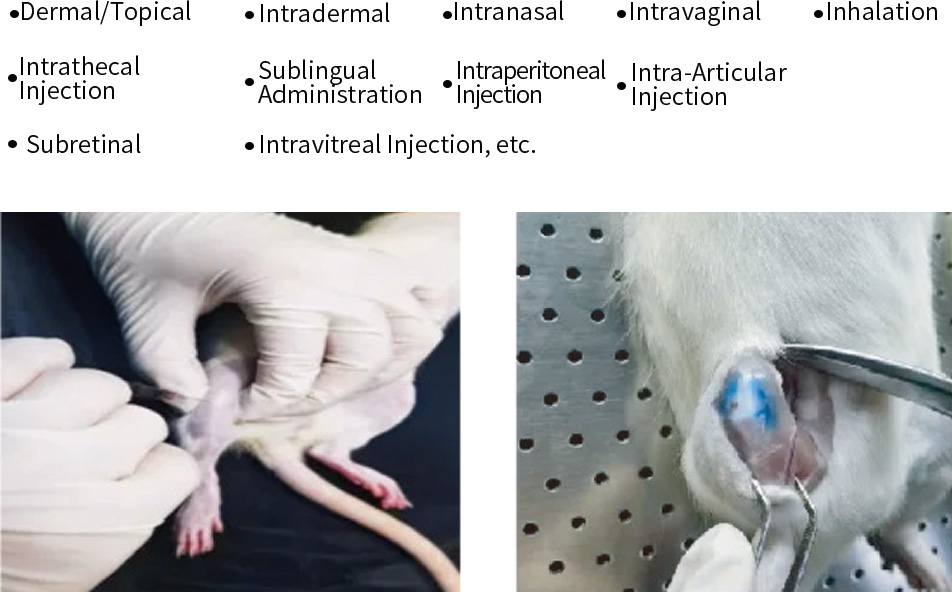
● Special Administration Routes
◆ Safety Pharmacology Studies
Cardiovascular System
Central Nervous System
Respiratory System
Gastrointestinal System
Urinary/Renal System

◆ Immunogenicity Studies
● Immunity and Inflammatory Disease Research
The immunogenicity of a drug refers to the ability of the drug and/or its metabolites to induce an immune response or immune-related events against itself or related proteins. The impact of immune responses can range from the temporary appearance of clinically insignificant anti-drug antibodies to severe, life-threatening events. Unnecessary or unexpected immune reactions may neutralize the biological activity of the drug, lead to cross immune reactions with corresponding endogenous proteins, or trigger adverse events such as allergic reactions and cytokine release syndrome, all of which significantly affect patient safety and drug efficacy.
Immunogenicity research should be considered throughout the entire drug development lifecycle. The immunogenicity risk should be predicted based on factors such as the drug’s mechanism of action, product related characteristics, and the intended indication. Studies should then be designed according to the immunogenicity risk for risk identification. Immunogenicity data from non clinical studies contribute to the overall analysis of safety data.
● Service Offerings
Developed and validated multiple analytical methods
Flow Cytometry
ELISA (Enzyme-Linked Immunosorbent Assay)
MSD (Meso Scale Discovery) Electrochemiluminescence
qPCR (Quantitative Polymerase Chain Reaction)
Provide various immunogenicity biomarker testing services
Analytical method development and sample testing: Flow Cytometry, ELISA, MSD, qPCR
Cellular Immunophenotyping Analysis (Mouse, Rat, Rabbit, Guinea Pig, Dog, Monkey, Pig)
Lymphocyte Subtype Detection (CD3+, CD4+, CD8+)
Macrophage Count (M1 and M2 Types)
NK Cell Count (CD16+, CD56+), etc.
Multiplex Cytokine Detection: Flow Cytometric CBA (Cytometric Bead Array), MSD, ELISpot
Humoral Immunity Analysis:
Immunoglobulins (IgA, IgE, IgG, IgM)
Complement Components (C3, C4, C5, C5a)
Specific Antibody Detection and Method Development
Antibody Drug Receptor Occupancy: ELISA, Flow Cytometry
Neutralizing Antibody Analysis: Cell-Based Assays, MSD, ELISA
Anti-Drug Antibody (ADA): ELISA, MSD
◆ Genotoxicity Studies
● Service Introduction
We provide genotoxicity screening tests required for early drug discovery, as well as standard genotoxicity test batteries compliant with GLP standards and relevant guidelines for clinical trial application stages. Test protocols are designed according to guidelines from NMPA, FDA, OECD, etc., and all tests can be conducted under GLP standards.
Genotoxicity Screening Tests
Mini Ames or Ames Test
In Vitro Micronucleus Test
In Vitro Chromosomal Aberration Test
Mouse Lymphoma Assay
In Vivo Micronucleus Test
Standard Genotoxicity Test Battery
Ames Test
In Vitro Micronucleus Test
In Vitro Chromosomal Aberration Test
Mouse Lymphoma Gene Mutation Assay (MLA)
Rodent In Vivo Micronucleus Test: Can be conducted as a standalone study or integrated into general toxicology studies.
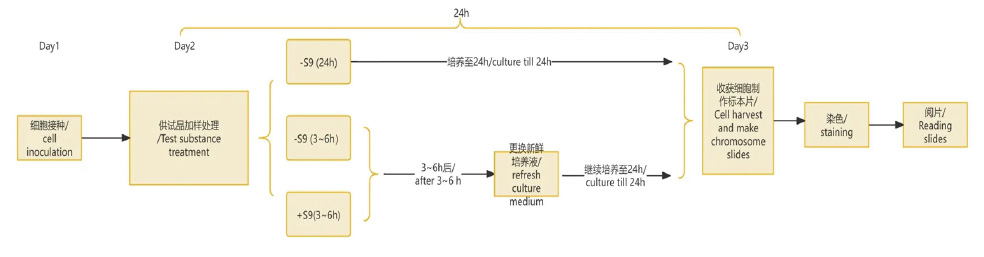
Chromosomal Aberration Test(Experimental Flow Chart)
◆ Reproductive Toxicity Studies
● Service Introduction
Reproductive toxicity studies are a crucial step for drugs entering clinical research and marketing. They aim to reveal the effects of a drug on mammalian reproductive function and on embryonic and fetal development, and constitute an essential part of non-clinical safety evaluation. The primary objective is to reflect, through animal testing, the impact of the test article on mammalian reproductive function and the developmental process, predicting potential adverse effects on parental reproductive functions such as germ cells, fertility, pregnancy, parturition, and lactation, as well as adverse effects on offspring, including embryonic-fetal development and postnatal development.
Based on R&D strategy combined with the structure of the test article, we provide flexible study protocol design and execution, offering Segment I-III studies compliant with GLP standards of NMPA, FDA, and OECD.
● Service Content
Segment I Reproductive Toxicity Study
Fertility and Early Embryonic Development Toxicity Study. Dosing occurs from pre-mating through the mating period until embryo implantation. Observations include general toxicity to male and female parents, effects on fertility, and early embryonic developmental toxicity. It evaluates the drug’s impact on fertility and early embryonic development.
Evaluation Content: Male sperm, female estrous cycle, mating behavior, fertility, pre-implantation and implantation stages, etc.
Segment II Reproductive Toxicity Study
Embryo-Fetal Development Toxicity Study, also known as the Teratogenicity Sensitivity Period Study. Dosing occurs during the organogenesis period. Observations include general maternal toxicity and embryo-fetal developmental toxicity (death, malformations, developmental abnormalities). It aims to reveal potential embryo-fetal toxicity and teratogenicity of the drug.
Evaluation Content: Maternal toxicity, embryo-fetal death, fetal external alterations, visceral and soft tissue alterations, skeletal variations and malformations.
Segment III Reproductive Toxicity Study
Perinatal Reproductive Toxicity Study. Dosing occurs during the perinatal and lactation periods. Observations include general maternal toxicity, parturition, lactation, offspring developmental toxicity (death, malformations, developmental abnormalities), and functional toxicity.
Assessment Content: Assessment of maternal toxicity, perinatal survival of offspring, alterations in offspring growth and development, and functional deficits including sensory function, spontaneous activity, learning and memory, sexual maturation, and reproductive capacity at maturity.
◆ Carcinogenicity Studies
● Service Content
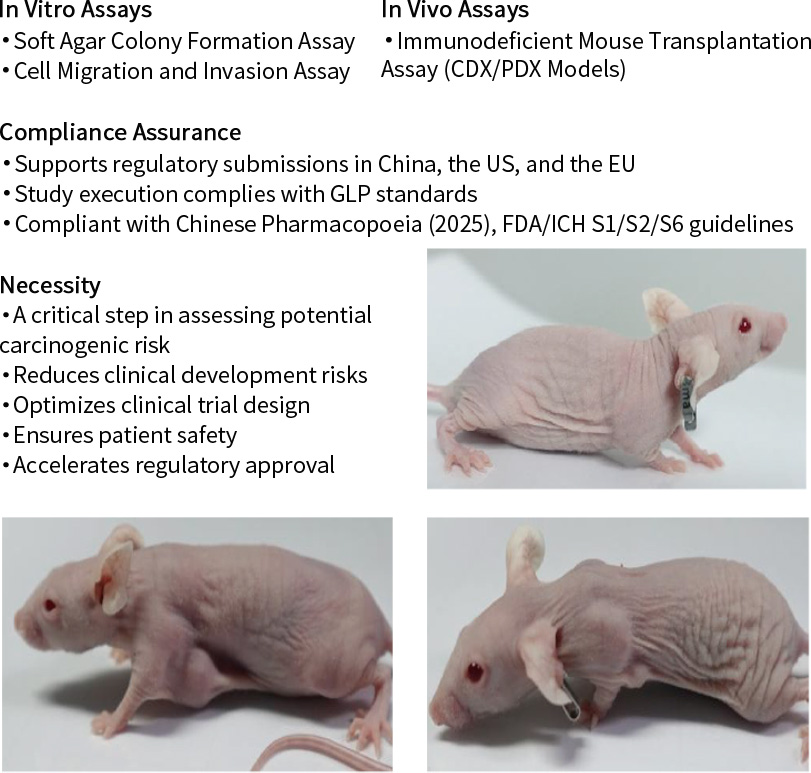
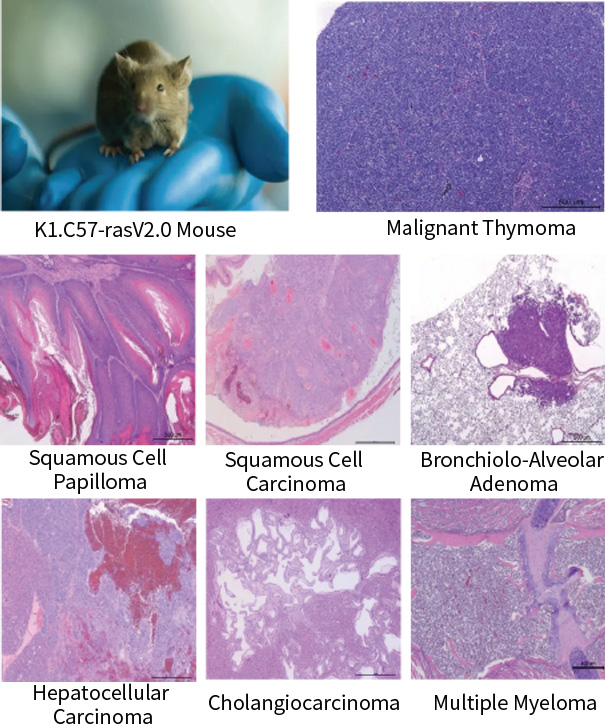
The purpose of carcinogenicity studies is to identify potential carcinogenic effects in animals, thereby assessing the associated risks in humans.
Necessity of carcinogenicity studies:
Any concerns arising from laboratory studies, animal toxicology studies, and human data;
Drugs anticipated to be used continuously for a major portion of a patient’s lifetime;
Given that carcinogenicity studies are time-consuming and resource-intensive, they are only conducted when human exposure scenarios genuinely require information from animal lifelong dosing studies to assess the potential carcinogenicity of a substance.
Testing Methods
Case Sharing
◆ Dependence Studies
● Purpose
Drug dependence refers to the need for repeated drug use due to its pharmacological effects on the body (physiological) or mind (psychological), in order to feel good or avoid feeling discomfort. Drug dependence assessment can be used to determine the degree of drug dependence and the risks of use, guide the writing of product labeling, and inform post-marketing risk monitoring requirements and management standards (e.g., inclusion in narcotic or psychotropic drug schedules). A related but distinct concept is drug abuse. Drug abuse refers to the intentional, non-medical use of a drug to achieve desired physiological or psychological effects.
● Service Content
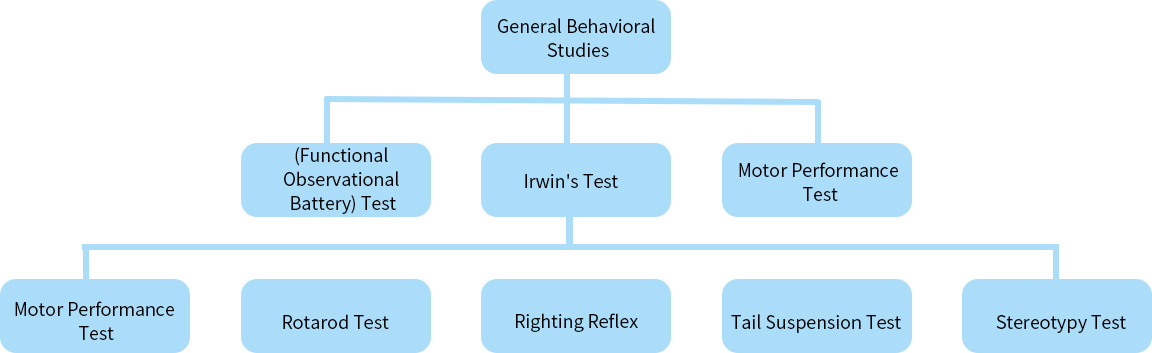
Animal Behavioral Dependence Studies:
General Behavioral Studies
Evaluation of Reward/Reinforcement Properties (Self-Administration Test, Conditioned Place Preference Test)
Evaluation of Similarity to Effects of Known Drugs of Abuse
Evaluation of Physical Dependence

◆ Local Toxicity Studies
● Purpose
To study the local and/or systemic toxicity induced by pharmaceutical preparations at the site of administration, in order to indicate potential toxic reactions, target organs of toxicity, and safety margins in clinical use.
Hemolysis Tests
In Vitro Hemolysis Test
In Vivo Hemolysis Test
Allergy (Hypersensitivity) Tests
Active Systemic Anaphylaxis (ASA) Test
Passive Cutaneous Anaphylaxis (PCA) Test
Active Cutaneous Anaphylaxis (ACA) Test
Guinea Pig Maximization Test (GPMT)
Guinea Pig Closed Patch Test (Bühler Test, BT)
Skin Photoallergy Test
Irritation Tests
Skin Irritation Test
Vascular Irritation Test
Muscle Irritation Test
Mucosal Irritation Test
Phototoxicity Test for Topical Application
Circumstances Requiring Formulation Safety Testing
Innovative Drugs:Comprehensive assessment of systemic risk + formulation safety risk. Study design shall support the clinical trial protocol.
Improved/Modified Drugs:When formulation/process or route of administration is changed (e.g., oral to injectable), re-evaluation of formulation safety is required.
Generic Drugs:When formulation/process or route of administration is changed (e.g., oral to injectable), re-evaluation of formulation safety is required.
Biological Products:Refer to ICH S6(R1). Focus on immunogenicity. Significant changes require supplementary safety data.
Specially Exempted Products:Products with simple pharmaceutical quality control (e.g., Water for Injection, Sodium Chloride Injection) usually do not require submission of safety data.
Imported Products for Registration:Animal studies or clinical trial data conducted overseas in compliance with relevant international standards are acceptable.
◆ Toxicokinetic Studies
Definition of Toxicokinetics (TK): A cross-disciplinary field combining pharmacokinetics (PK) and toxicology. It is an extension of pharmacokinetics in the evaluation of systemic exposure, serving as a component of non-clinical toxicity studies or as a specifically designed supportive study to assess the systemic exposure of a drug, used to elucidate toxicological findings and their relevance to clinical safety concerns.
Toxicokinetic Study Methods: Employs the principles and methods of pharmacokinetics.
Focus of Toxicokinetic Studies: To describe the systemic exposure in animals and its relationship with the dose and duration in toxicity studies, and to interpret the results of toxicity studies, rather than to describe the fundamental pharmacokinetic parameter characteristics of the test article.
● Study Types
Supportive Toxicokinetic Evaluation for Single-Dose Toxicity Studies
Supportive Toxicokinetic Evaluation for Repeat-Dose Toxicity Studies
Supportive Toxicokinetic Evaluation for Genotoxicity Studies
Supportive Toxicokinetic Evaluation for Reproductive Toxicity Studies
Supportive Toxicokinetic Evaluation for Carcinogenicity Studies
Supportive Toxicokinetic Evaluation for Biodistribution Studies
Pharmacokinetic Studies Under Toxicity Study Conditions
Drug Toxicokinetics